
Abstract
This research project focuses on building a deeper understanding of the social history of St Helena Island. It will identify families living as part of the warders’ community from the late 1860’s until 1932, and document these in a digital database. The project will also analyse this data to ascertain the roles wives performed, identify issues faced by families living in a colonial penal environment and determine women and children’s unique contribution to St Helena Penal Establishment.
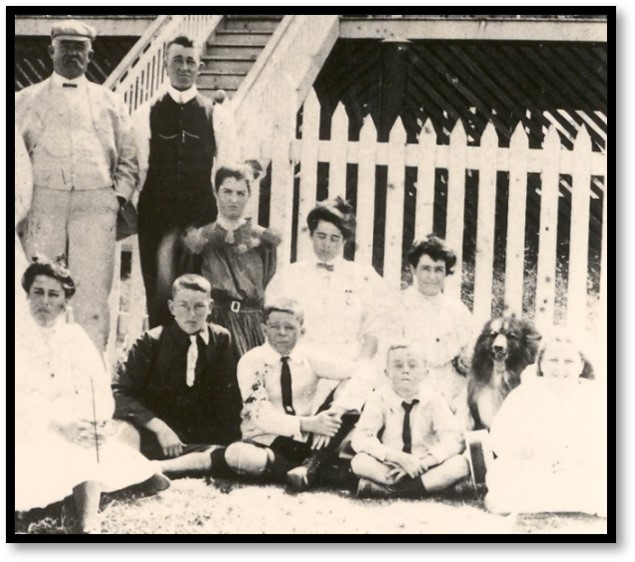
Fiona Pearce Collection, Qld Parks and Wildlife Service.
Methods and Sources
This research has utilised a combination of official prison documentation, academic texts and genealogy. This blends statistics, data and official prison information with story – the unique stories of a people who came together to create a vibrant community while living under penal rule. As women were largely absent from written texts of St Helena Penal Establishment, genealogy has assisted in identifying individuals and families, as well as placing them in a specific time period on St Helena Island. This then allows the researcher to make important connections to the St Helena Penal Establishment regulations and events from the prison era.
Contributions
This research has successfully identified and documented 47 families living at St Helena Penal Establishment from 1867 – 1932. Extensive written biographies have been completed for each of the St Helena families, with the inclusion of personal biographical information, prison employment and other occupations, specific events on St Helena Island, relevant images and information sources.
A digital store of information has also been created, housed in the St Helena Island Community’s SharePoint database. A new ‘women and children’ section has been added to the database where the written biographies are located. A spreadsheet of the 255 individual people living at St Helena Penal Establishment has been created in this section and a synthesis of information regarding the issues and contributions of women and children has been established here. This information also connects to relevant information in the SharePoint site regarding warders and penal management.
The research conducted by Belinda Daly has resulted in the production of a large quantity of original statistics specifically focused on the families connected to St Helena Penal Establishment (1867 – 1932). This detailed information has never existed previously and makes available some important statistics about the structure and composition of families, length of time spent on St Helena and births, deaths and marriages on St Helena. This data is now available for further analysis and future research opportunities.
The inclusion of specific examples and names of families, individual women and children in the research report is deliberate. Women appear infrequently in recorded historical documentation and as a result do not become part of the shared history and story of a site, and this is particularly true of St Helena Penal Establishment. The identification and naming of women and families ensure that women’s and families’ names are now documented in perpetuity, rather than remaining invisible and forgotten.
As a study of the social history of St Helena Penal Establishment, the blending of academic research and official data with genealogical information has allowed the researcher to gain far deeper insights into the lives and experiences of individual people and whole families. This then takes the story of St Helena Island beyond the current generalisations currently existing and the limited depth found in official documentation. The blending of various types of information has resulted in a story that is detailed, nuanced, complex and highly unique. This will now be utilised in interpreting the social history of St Helena Island.

Belinda Daly
Belinda Daly’s career has specialised in natural and cultural heritage, in both the Higher Education field and the interpretation field. She holds education qualifications from Victoria College and the University of Queensland where she specialised in Marine Studies. She also completed a Graduate Certificate in Applied Science – Environmental and Heritage Interpretation, from Deakin University. She is currently enrolled in a Master of Philosophy at William Angliss Institute, Melbourne (deferred), focusing on the use of drama and theatre as a pedagogy for delivering information in Cultural Heritage sites.
Belinda is also a writer and amateur historian, focusing on her passions around sharing the complex and layered stories of natural and cultural heritage landscapes. She established ‘The St Helena Island Community’ in 2017 and established a website, creating blog posts and eBooks to share fresh new perspectives on the penal establishment, immigration story, aboriginal history and natural sites that form part of this island’s history. Belinda, along with a librarian/ archivist and data specialist, has also established the St Helena Island Community Sharepoint site, the first ever digital collection of information and resources connected to any aspect of St Helena Island. Extensive research over 8 years has resulted in a detailed database of 6500 prisoners and 430 prison warders connected to the Penal Establishment, which now offers endless opportunities for research into studies of race, gender, class and social issues in the colonial era.
SHIC Website: https://sthelenacommunity.com.au
Identifying families and individuals
St Helena Penal Establishment (1867-1932) received over 7226 admissions of male prisoners, guarded by 441 male warders and other prison staff during it 65 years of operation as a penal establishment. [1] What is less known is the fact that during the same period, 47 families lived on St Helena Island, in a small community surrounding the prison stockade. The lives of the women and children in these families is less known and under researched, effectively wiping them out of the historical narrative. This project has endeavoured to identify all families, and all women and children within each family, that lived on St Helena Island during the prison era on a permanent basis.
These families were the families of prison staff who were fortunate enough to have permission for their families to join them on St Helena Island. The demand for families to live on the island was extremely high, right from the commencement of the prison. However, a lack of suitable, purpose built ‘married quarters’ restricted how many families were given permission to live on St Helena Island. At its maximum in the late 1880’s, 18 families were able to be accommodated on St Helena at any one time. Such was the demand, that Warder James Boyle asked to convert materials from the cattle quarantine shed into a home as ‘he and his family are most uncomfortably situated – separated from each other and at more expense than if living together.” [2] The Smyth family lived with “8 children in 2 small rooms, 5 of which are now obliged to huddle together at night in one room measuring 11ft by 10.” [3] The Dalton family asked to pitch a tent from a square of canvas to be able to live on the island. [4]
Who were these families?
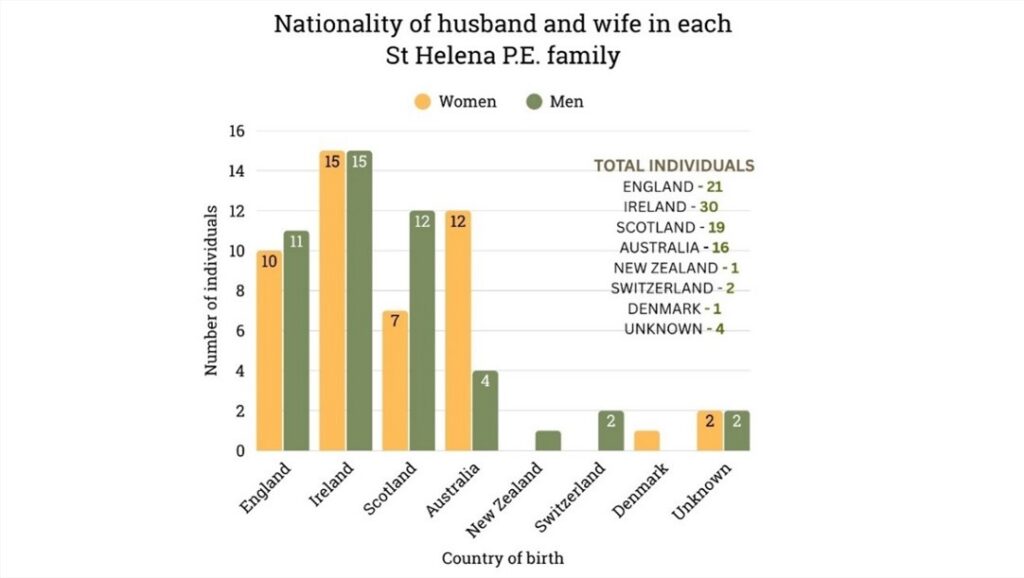
The surnames listed below are from the 47 families that lived on St Helena Island on a permanent basis for a distinct period of time during the prison era of 1867 – 1932. [5]
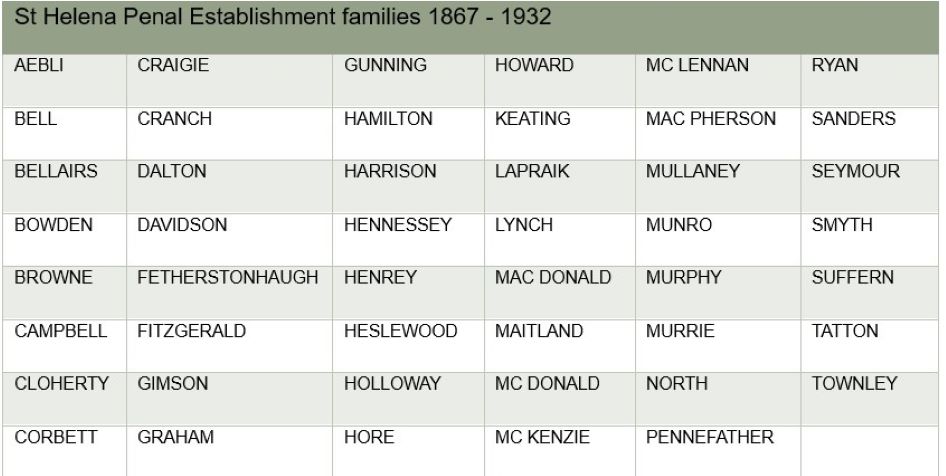
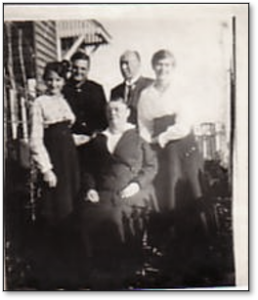
Image courtesy of Desni Wilkins.
[1] The St Helena Island Community SharePoint digital database (2026), The St Helena Island Community
[2] Colonial Secretary’s Correspondence, Queensland State Archives, Item ID ITM847355
[3] Colonial Secretary’s Correspondence, Queensland State Archives, Item ID ITM847084
[4] Colonial Secretary’s Correspondence, Queensland State Archives, Item ID ITM847274
[5] Research by Belinda Daly
Issues faced by St Helena Warders families
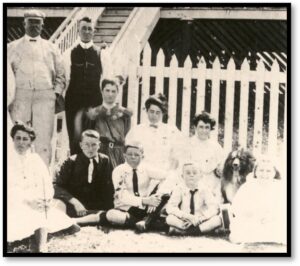
St Helena Penal Establishment was unique in many ways. In view of Brisbane’s population and only 8 kms from the mainland, sat a prison island that could not be accessed by any private boat, and would not accept passengers unless they had obtained written permission from prison authorities. On this closed off, isolated island, 47 free families lived under penal rule that existed across the island in its entirety. Research show that the penal establishment heavily influenced the experiences and lifestyle of warders’ families on St Helena Island, through political, legal, safety, medical, accessibility and geographical factors. Importantly, research also highlights how the impact of these factors changed over the 65 years, creating very different experiences for different families.
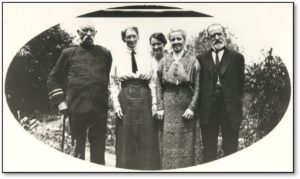
Sourced from Cottman Collection, Qld Parks and Wildlife Service.
Politics: A Government run site focused on a prison, not families
Over the 65 years of the penal establishment, the issue of what to do with families was ever-present. In 1867, authorities had clear views on allowing warders’ families to be on St Helena Island – that women were not welcome. The response to Warder Andrew Craigie’s application in 1868 for island housing was met with “We cannot consent to allow any families on the island. It is not a fit place for women.” [1] Such a blanket ban was impractical given that warder’s families would normally live within or around the prison complex on the mainland. St Helena’s geography meant families needed to be considered beyond the normal scope of political decisions, and pressure and demands from Warders remained constant. Still, in 1873 Warder Phillips’ application was refused as he had “a large family of half-grown boys and girls and I do not think half grown children should be allowed to come to St Helena.” [2]
Once families were given permission to live on St Helena, they provided further issues for authorities. Accessibility was also a constant issue as the tidal flats provided a physical barrier for the first 15 years.
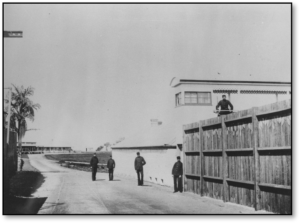
On an island where families were isolated from Brisbane society, the need to transport families to and from the island regularly required a large input of penal establishment time, money and infrastructure. The arrival of compulsory education in 1875 meant “children on St Helena needed schooling. Warder John North began teaching prisoners and children, as well as conducting his normal duties as Warder and Storekeeper. [3]
By 1891, education issues, a critical undersupply of housing, a Scarlet Fever disease outbreak and unmotivated warders made the Government remove the majority of the 18 families from the island overnight. This was a cleanse of a women and children problem for the Colonial Secretary’s Department that had been festering for decades.
The law: Penal rules and regulations and prisoner interactions
Women and Children on St Helena Island did have to abide by overarching penal regulations that existed to keep them safe, prevent escape from prisoners and maintain a disciplined and efficient prison. There were very few specific rules written into the St Helena rules and regulations as applied to families and can be summarised as follows:
- Access to and from the island required permission from the Superintendent, and private visitors before 1890 were limited.
- Women and children were not allowed to enter inside the prison stockade.
- 1873 Rules and Regulations clearly state that wives and children of warders are not permitted to interact with warders while on duty. [4]
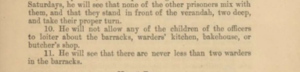
- 1883 Rules and Regulations state that children were not to loiter around or approach prisoners working around the Warder’s barracks and kitchen, butcher, bakery. [5]
- St Helena was an Alcohol-free island.
Economics: Large families at great expense
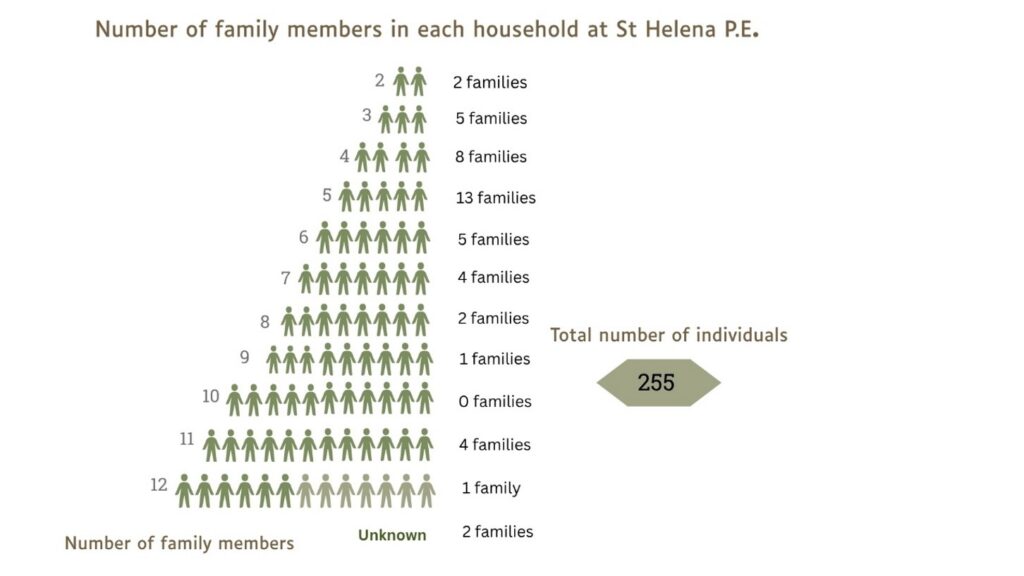
Over the decades, prison authorities found the St Helena families required a great deal of support with regards to housing, food, transport, health and medical, education and adherence to prison regulations. The burden was not small, as a total of 255 individuals lived on St Helena Island between 1867 and 1932 within the 47 families. ⁵ The numbers are not surprising, given this colonial period of time where large families were considered normal.
Safety: The inevitability of Prisoner interactions
Despite the regulations enforcing that children were not to interact with prisoners, women and children would come into contact with prisoners working in various parts of the island and who were hard to avoid. Senior management families were also allocated a number of prisoner servants. Bob Murrie Jnr recalled that in 1915 “we knew all the prisoners, a lot of them we knew by name and we were very friendly with them.” [6]
Some encounters were unplanned, unsafe and occurred as a result of prisoners breaking the prison regulations. Warder/ Tailor James Mullaney transferred to St Helena PE in 1879 from Brisbane Prison. As a Tailor Instructor, he was allocated a cottage on St Helena’s southern flats. Prisoner Edward Robinson wandered off from the quarry gang in 1880, climbed over the Mullaney’s house fence and walked in the door where Mrs Mary Mullaney was inside. Edward had “frequently assaulted warders, torn uniforms and destroyed gaol property” but said in this instance he was “only looking for a drink of water.” For this, Edward received 25 lashes with the cat ‘o’nine tails. [7]
Olga Aebli recalled in a letter that the three families with women on St Helena in 1916 required an escort when visiting each other for their own safety. [8]
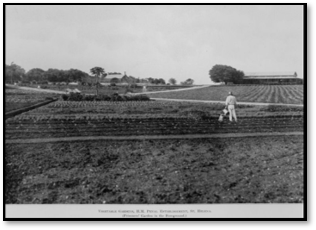
State Library of Queensland, Negative number: 67113
Geographical, penal and accessibility factors that influence each families’ lives on St Helena Island
Through this research, a greater understanding of the specific factors that have influenced each families’ lives on St Helena Island has been obtained. Three major elements exerted the greatest influence on the women and children of St Helena Penal Establishment (1867 – 1932):
- Changes in penal management and operations over the decades
- Changes in island accessibility over the decades
- The status of the family i.e. linked to the role of the husband
These three factors changed considerably over time and can be summarised in three distinct periods on St Helena Island.
[1] Colonial Secretary’s Correspondence, Queensland State Archives, Item ID ITM846838
[2] Colonial Secretary’s Correspondence Queensland State Archives, Item ID ITM846915
[3] Letterbook of the Sheriff containing letters to the gaoler at St Helena – Sheriff’s Office, Qld State Archives, ITM89490
[4] Queensland (1873). Rules and regulations for the management of St. Helena penal establishment. James C. Beal, govt. printer, Brisbane
[5] By-Rules to be observed in connection with the management of the St Helena Penal Establishment, Brisbane, 1883. nla.obj-2527066014
[6] Murrie, B. (1985). Bob Murrie Oral history recording (E. Mitchell). Moreton Bay EEC.
[7] Prisoners’ deposition book 1867 to 1886- HM Penal Establishment, St Helena. Queensland State Archives, ITM92271
[8] O. Andersen nee Aebli, personal communication, (n.d.)
1867 – early 1880s: Pioneer families facing isolation and discipline
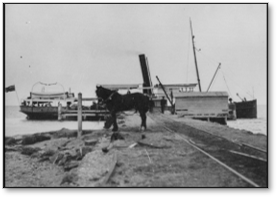
The smaller number of pioneer families were often new migrants from the United Kingdom, who found themselves pioneers in a newly established site. Mainland access was very difficult as there was no jetty until the end of this period and many cart and boat transfers were needed. Families had limited resources on St Helena and had to literally create the accommodation, food production areas, gardens, crops and school they needed for daily life. Penal regulations were centred around strict discipline and harsh punishment for both prisoners and warders.
The Lapraik and Craigie families were pioneer St Helena residents and friends who met on the ship as they emigrated, with Helen Lapriak becoming a witness at the birth of Mary Craigie on St Helena Island in 1875. [1] Medical assistance relied on a weekly Visiting Surgeon visit, but son Andrew Craigie died on the 29/12/1875 from a Scarlet Fever outbreak.[2] As the first warder’s child buried on St Helena Island, the families even had to establish a small cemetery on the island to bury Andrew.
Early 1880s to 1891: A large and social warder’s community restricted by penal rule
A large, social community of 18 families existed at St Helena PE from the early 1880s to 1891, and demand was high for more families to join them on St Helena Island. A jetty allowed large government boats to regularly call at the island to give families easier access to the mainland. Structures and resources required for daily lives was established, though women and children needed ingenuity to maintain a sustainable household due to limitations on what resources could be purchased on the island. Education was supplied in an island school by a qualified teacher, many recreation options existed and their social life was improved via island concerts and balls. Penal Management was still strict and harsh punishments meted out as the prison now held up to 300 prisoners.
Ex-policeman Joseph Bell was grateful to be offered a home on St Helena Island in 1885 for himself, his wife Frances, 2 young children and another baby born in October 1885.[3] Isolation on St Helena Island meant Warder Joseph Bell was often ill and at Brisbane for treatment, leaving Frances alone.[4] When Joseph died on St Helena Island on the 27/09/1886, strict prison regulations were enforced, with Frances being asked to leave her St Helena PE home immediately. [5] As Warder John Sanders rejoiced that he could finally bring his family to St Helena, a grieving Frances Bell and her three children aged 4, 3 and 1 year, were faced with finding a home and financial support in Brisbane.
Mid 1890s to the 1920s – A small, socially connected community with greater freedom.
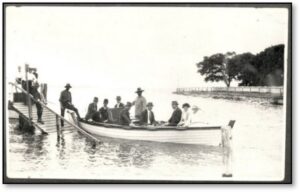
The permanent removal of warders’ families in 1891 due to an outbreak of Scarlet Fever left only a small number of families, all belonging to prison staff involved in the management of the prison as well as clerical duties. The few families that were left were highly mobile in accessing the mainland very regularly via a variety of boats. They enjoyed their island home by frequently entertaining visitors to their home and enjoy leisure pursuits on the island and in the ocean. Prison management had changed to entertain ideas around reform, relaxing harsh punishments and heading towards an ‘honesty system.’ The Chief Warders Diaries of 1895 and 1899 show a highly social time, with people coming to visit at least every second day or the warders’ families heading to the mainland regularly. At one stage, Kenneth McLennan, the Storekeeper’s son, was refused to board the island boat by Warder Campbell. His reply: “I will join the boat whenever I like. The superintendent told me I could, and there will be a big row.” He was 14 years old at the time. [6]
[1] Qld BDM Certificate, Birth Registration No. 1875/B/18837 Mary Calder Craigie
[2] Qld BDM Certificate, Death Registration No. 1876/B/10316 Andrew Craigie
[3] Qld BDM Certificate, Birth Registration No. 1885/B/35082 Joseph Archibald Bell
[4] Colonial Secretary’s Correspondence, Queensland State Archives, Item ID ITM847049
[5] Colonial Secretary’s Correspondence, Queensland State Archives, Item ID ITM847215
[6] St Helena diary 1895, sourced from Qld Parks and Wildlife Service and St Helena diary 1899. (1991). Main Roads Dept, State Library of Qld.
The role of status
As stated previously, three major factors exerted the greatest influence on the women and children of St Helena, with the third being the status of the family. This was directly linked to the role of the husband. In terms of social isolation and accessibility, having a higher ranked role made a major difference in their daily lives on the island as well as opportunities to connect with the mainland. It also appears to influence the length of time a family remains on St Helena Island.
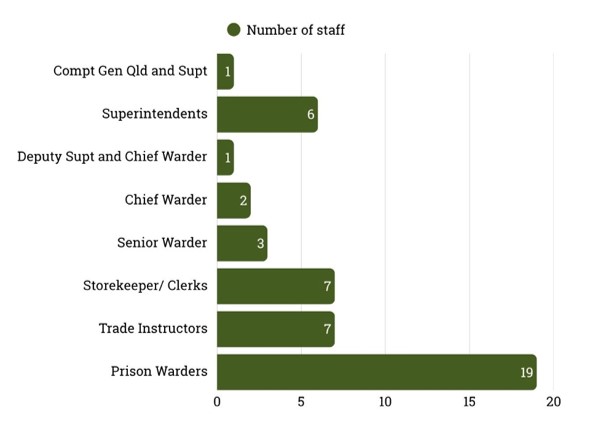
Roles of Warders with families at St Helena Penal Establishment (1867 – 1932)
Influence of role: an island home
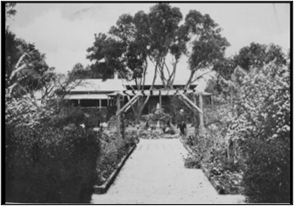
Higher status roles such as Superintendents, Chief Warders, Senior warders and Storekeeper/ Clerks were generally supplied with a home for their family. Superintendents’ wives and children were accommodated in the largest home on the island, with extensive ornamental gardens, functional gardens supplying fruit and vegetables and also livestock to supply meat and dairy products.
The dire lack of married accommodation on St Helena Island for the ordinary warders made it a prized commodity, as NOT having a family on the mainland meant warders saw their families once every 4 to 6 weeks. Added to that, cottages were also available for the majority of warders who also worked as Trade Instructors, including Tailor, Saddler, Bootmaker, Carpenter, Sugar Boiler and Mason.
Interesting statistics have been gathered on the length of time families remain on the island and the corresponding roles of the husband. It can be seen that the families who spent the longest time on the island were all from higher status roles in Senior management and Trade Instruction.
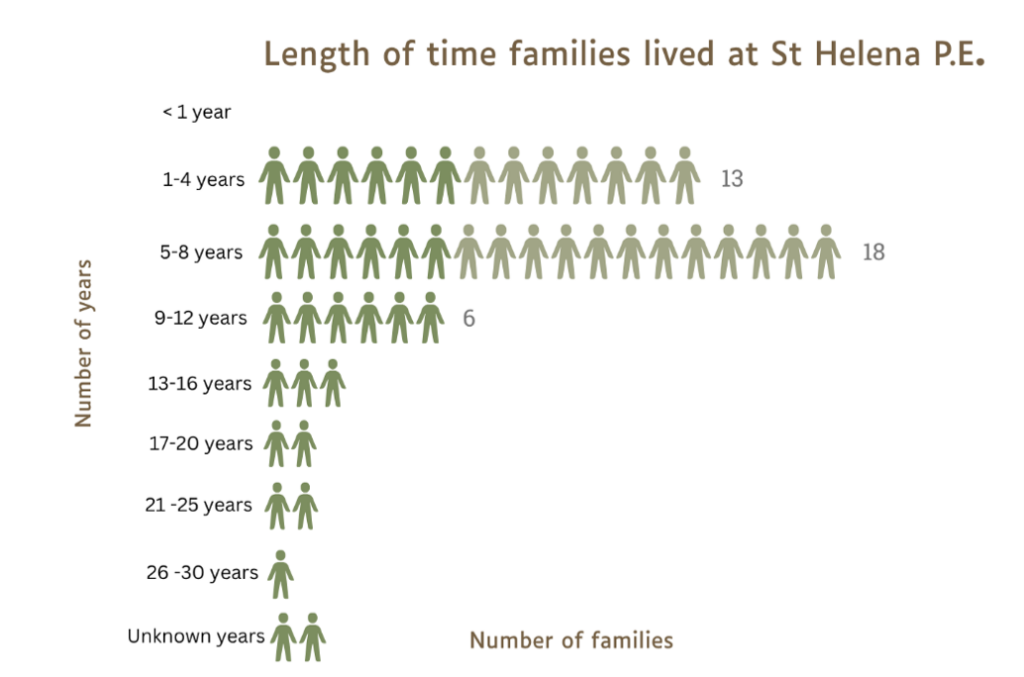
Longest serving families at St Helena Penal Establishment (between 13 to 30 years) were
1 x Comptroller General/ Superintent
- Charles and Mary Pennefather
2 x Superintendent
- James and Sarah Ryan
- John and Alice McDonald
1 x Chief Warder /Deputy Superintendent
- James and Ann Hamilton
1 x Chief Warder / Acting Superintendent
- David and Mary Ann Graham
1x Chief warder
- William and Sarah Bowden
1 x Senior warder
- Charles and Alice Davidson
1 x Trades Supervisor and Instructor
- William and Jane Smyth
Influence of role: Forced removal except for a few
January 1891 was the moment Scarlet Fever triggered the forced removal of all warders’ families from St Helena. The warders’ families were forcibly removed with no notice to Peel Island or hospitals in Brisbane and could not return to their homes at all. Immediately, a deputation was formed, with Warders Gunning, Dalton, Murphy, Munro, Lynch and Fetherstonhaugh, meeting with the Colonial Secretary to plead their case. They felt that “Nothing had occurred on the island for the past twenty years to warrant the sending away of their wives and families from the island, and the warders affected felt they were being dealt with very harshly. (One) had a wife and three children, and he would feel it very keenly if compelled to live apart from them and only see them once every four and a-half months.”[1] The decision was final, but the higher status Senior management families were excluded from this ruling and remained. Donald MacPherson’s wife Kate and their 2 sons were hospitalised in Brisbane with symptoms and once recovered had to find a find a permanent home in Brisbane.[2] Donald remained working as a warder on St Helena where their son Christopher was buried,[3] but the shock of separation and illness meant Donald died shortly after in 1891.
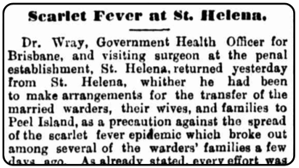
Influence of STATUS: The few remaining families
Senior management and Storekeepers remaining on St Helena Island during the mid-1890’s to 1920s faced a new challenge – social isolation due to fewer families on island. However, they also seemed to have less restrictions around their private life on the island and were able to enjoy a higher quality of life than in previous decades. Due to the higher rank of the people remaining, the families appear to come together to create a vibrant and socially connected community. The 1899 Chief Warder Diary records bi-weekly or weekly fishing trips in island boats by the Pennefather, Bowden and McLennan’s families, including their children. They were accompanied by boat warders and 2 or 3 South Sea Islanders prisoners to manage the vessel. Catches of 100 and 595 fish caught in 1899 were shared with island families and prisoners.[4]
It is interesting to note that while many families were removed with a strict and hard-line decision by prison authorities, the penal regulations were relaxed to allow those with higher status to have long term visitors living continuously on St Helena Island. Mary Jane Houghton came to live with her sister Elizabeth Ryan, wife of the Superintendent after her husband Edgar died in 1892, only a year marriage. Electoral rolls show that Mary Ann was a resident from around 1903 – 1915.[5] Mary Christensen came to live with Storekeeper John Aebli, his wife Anna Petrea and two daughters Stella and Olga in approx. 1917.[6] Mary’s Danish family and Danish born Anna Aebli were great friends, and Mary needed somewhere to live. Despite not being a blood relative, Mary resided at St Helena for nearly two years, displaying a great amount of leniency on the part of prison authorities.
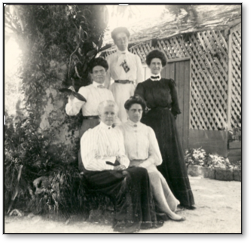
Influence of STATUS: Status comes with economic benefits AND issues
On St Helena Island, the Superintendents wives and daughters were not officially employed or paid as Matrons, even though many were appointed and paid to do these roles officially at other Queensland gaols. Why this was made at St Helena only is unclear, as the Superintendents’ wives were expected to unofficially perform the duties of hostess for every official dignitary and large group that visited the island. Mary Pennefather and her husband Charles, the Comptroller General of Prisons retained a residence on St Helena to which a constant stream of visitors arrived. In the year 1899 alone, they played host to Lord and Lady Lamington, the Premier of Qld, parties of 200 guests and even the Governor of New Guinea. [7]
Official visitors arrived at St Helena PE continuously, with weekly visits of the Visiting Surgeon and Visiting Justice, prison officials and others, many of these were required to stay overnight at the Superintendent’s or the Comptroller’s residence. Economically, all entertaining of the daily visitors to the island was paid for from the wage of the Superintendent and/ or the Comptroller General. Over 3 successive decades, Superintendents McDonald, Townley, Pennefather and Ryan all wrote regularly to the Colonial Secretary, requesting a salary increase with extra funds be allocated to cater for the high cost of “entertaining all strangers remaining on the island for a day or two – as in the case of the Clergymen, doctors, and others whose duty required them to remain here for a short time.” [8]
Influence of STATUS – an abundant supply of servants
Senior management families were allocated prisoners to work as gardeners, dairymen and house servants to assist in the effective running of the household. Superintendent William Townley even hired a prisoner fluent in Greek and Latin to be tutor for his two sons Henry and Norman.[9] Prisoners required supervision by the members of the family, and this was not necessarily an easy task, as evidenced by Mary Ann Graham, the Chief Warder’s wife. Her house servant, Frederick Sven Hamilton, decided to escape from St Helena P.E. in 1914 using a bathtub, door and some stools taken from her home. He nearly made it to Fisherman Islands before being retrieved. [10]
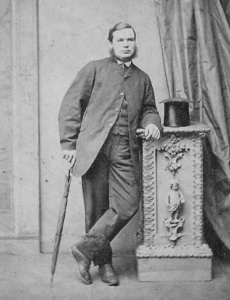
Henry Charles Gimson (1845-1915) – Find a Grave Memorial
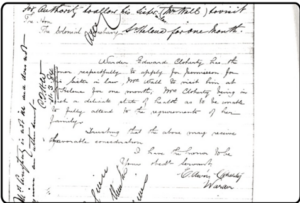
Hired help from the mainland also appears to also have be permitted. Chief Warder Henry Gimson requested that a nursemaid be brought over to St Helena in 1882 to assist his wife Mary with their four daughters, which was approved.[11] However, a request from a lower status warder, Edwin Cloherty in 1884 was not treated the same. When his wife Mary was unwell and ‘unable to fully attend to the requirements of her family,’ a request was made for Mary’s sister Anne Wall to live with the family for a month to assist. It was not approved. [12]
Abuse of role: Status and nepotism on St Helena Island
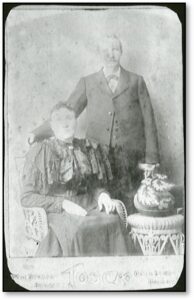
The Newspapers of 1902 contained lengthy articles about the “island of unrest.” [13] This was concerning a long-standing clash between two important families on St Helena Island. William Bowden had begun as a Warder on St Helena in 1871.[14] Seen as a valuable prison officer, William’s wife Sarah and their 9 children all lived on St Helena at various times since 1874. The family’s long history with St Helena Island included the first death of a child at St Helena Penal Establishment in 1874, which was William and Sarah’s daughter Sarah. [15]By 1902, William Bowden had been Chief Warder for 9 years, two of his daughters, Mary and Alice, had both married two St Helena PE warders and his sons James and William had both worked as warders at St Helena PE. [16]
While this is remarkable, the wider Brisbane society saw this as favouritism and nepotism and an abuse of the higher-ranking role that William Bowden occupied. Articles reported the “family monopoly is distinctly unfair to other officers and is the fruitful cause of much bitterness and ill-feeling. It should be sternly discountenanced. The evil is intensified when the head of the family is in charge of a department.” [17]
At the same time, a charge was laid by Warder Lough into misappropriation of government resources by Superintendent James Ryan, who came to St Helena with his wife Elizabeth in 1894. The charge was seen to be supported by the Bowden family as “it is a well-known fact that they are antagonistic to Ryan.” This eventually led to an inquiry, for which Ryan was cleared, but the long-term clashes between the highest-ranking officers would have continued to affect all the women and children in their respective families and the warder’s community as a whole. [18]
[1] SCARLET FEVER AT ST. HELENA. (1891, February 3). The Brisbane Courier (Qld. : 1864 – 1933), p. 5. Retrieved May 7, 2026, from http://nla.gov.au/nla.news-article3521972
[2] SCARLET FEVER AT ST. HELENA. (1891, January 30). The Brisbane Courier (Qld. : 1864 – 1933), p. 5. Retrieved May 7, 2026, from http://nla.gov.au/nla.news-article3521792
[3] Queensland BDM Certificate, Queensland Death Certificate, 1884/C/4062 Christopher MacPherson
[4] St Helena diary 1899. (1991). Main Roads Dept, State Library of Qld.
[5] Australian Electoral Rolls 1903, 1905, 1909, 1915, Australian Electoral Commission.
[6] D. Wheeler (2020). Personal Communication 05/06/2021
[7] St Helena diary 1899. (1991). Main Roads Dept, State Library of Qld.
[8] Colonial Secretary’s Correspondence, Queensland State Archives, Item ID ITM847241
[9] Norman Townley recollections (n.d.). Sourced from Piper McCall, stored at QPWS Heritage Parks.
[10] Report of the Inquiry held by RA Ranking, Police Magistrate. Tabled in the Legislative Assembly, 1st December 1911
[11] Colonial Secretary’s Correspondence, Queensland State Archives, Item ID ITM847078
[12] Colonial Secretary’s Correspondence, Queensland State Archives, Item ID ITM847112
[13] Hell at St. Helena. (1902, September 7). Truth (Brisbane, Qld. : 1900 – 1954), p. 3. Retrieved May 11, 2026, from http://nla.gov.au/nla.news-article200512466
[14] Register of Officials and Warders and Defaulters’ Book. Queensland State Archives, ITM271698
[15] Queensland BDM Certificate, Death Registration No. 1874/B/8296 Sarah Margaret Bowden
[16] Register of Officials and Warders and Defaulters’ Book. Queensland State Archives, ITM271698
[17] Hell at St. Helena. (1902, September 7). Truth (Brisbane, Qld. : 1900 – 1954), p. 3. Retrieved May 11, 2026, from http://nla.gov.au/nla.news-article200512466
[18] Inquiry into charges made against James Ryan, Superintendent of St. Helena Penal Establishment – Prison’s Department. Queensland State Archives, Item ID ITM89506
The roles of women: Some women took the lead
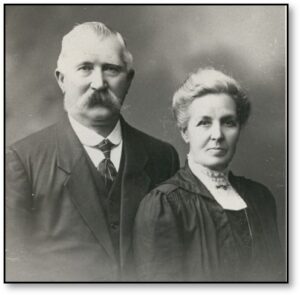
Alice McDonald was the first woman to assume the leadership role of Superintendent’s wife when her husband was officially appointed Superintendent in May 1867. As a pioneer woman, she had to physically establish the Superintendent’s residence and surrounding gardens ‘where the useful and the beautiful are admirably combined.’[1] St Helena Penal Settlement became renowned for the exotic tropical fruits, towering shade trees, flowers and flowing coral fountains that visitors could walk amongst and residents could consume. Gardens were extended during the 1890’s to the 1910’s, with Mary Ann Graham, wife of the Chief Warder, creating formal flower gardens along warders’ row and Elizabeth Ryan, wife of the Superintendent, establishing an extensive fernery, garden fruits and flowers at the Superintendent’s residence.
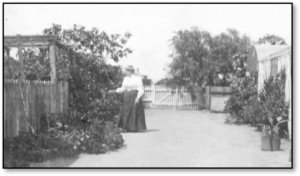
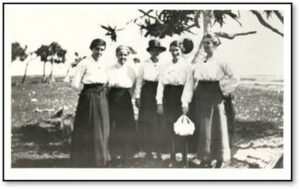
Thompson Collection, sourced from Qld Parks and Wildlife Service
Superintendent’s wives were the expected to take the lead in welcoming and hosting official visitors to the Penal Establishment, supervising the serving of refreshments, lunches and dinners, entertaining, making polite conversation promenading through the gardens. Women provided societal respectability to the penal establishment, assisting in upholding adherence to social norms in wider society regarding clothing, duties and appropriate behaviour.
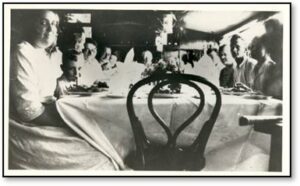
The roles of women: Women maintained the homefront
The St Helena Island families lived in a timber four-room Married Quarters cottage, each with attached rainwater tanks for fresh water supply. Women supported their warder husbands by gathering water from tanks, tending to vegetable gardens to provide extra food, keeping chickens, cleaning the house, cooking the food within the home, sewing, doing the washing and tending to the children. The value and importance of these duties did get recognition by the men living at the penal establishment, best illustrated by Warder and Sugar Boiler Richard Gunning. A single man on arrival in June 1883, he claimed he could not possibly cook and clean for himself and demanded a prisoner to do these tasks.[2] When he married in October 1884, his new wife Margaret took over the role, and the prisoner servant was no longer needed. Only those women who husbands worked in senior management roles received some assistance with domestic and garden tasks. In the 1910’s, Mrs Charlotte Murrie, the Senior Warder’s wife, had many prisoners as house servants, including “Tommy and Victor (were) houseman… (and) Billy Bosely used to empty all the night tins from the warder’s residences every morning… and also tended the vegetable gardens around the cottage.”[3] Charlotte’s son Fred said he was “never scared of prisoners because the warders were always looking out for them.” [4]
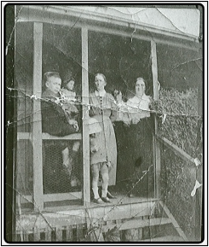
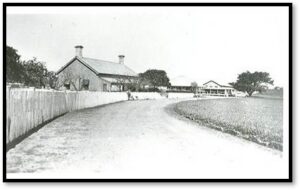
Image sourced from Qld Parks and Wildlife Service
The roles of women: Education on St Helena
Compulsory education for Queensland children aged 6-12 years was introduced in 1875. Bringing children to the mainland was not a viable option, so a schoolhouse was built on St Helena Island in 1874, with Warder North as schoolteacher. St Helena women and children showed the value they placed on education by ensuring 15 children attended the new island school, were motivated in their studies and completed their homework. Reports in 1875 showed “a great desire to improve is manifest from the attention they pay to their studies and considerable proficiency had been attained by a great many.”[5] By 1881, a frustrated Superintendent John McDonald penned correspondence highlighting that St Helena children were taught by a warder and only ‘getting 3 hours day and frequently not that.” [6]
A Department of Education teacher was finally appointed and in August 1884, Walter Hore, arrived at St Helena School No. 12 as teacher, moving his entire family onto the island. However, a young woman chose to make a large contribution to educating St Helena’s children also. Six months earlier, Walter Hore’s daughter Edith had already passed her teaching examination at Kelvin Grove School at age 13. By August 1885, Walter requested that 15-year-old Edith be employed as an unpaid Pupil teacher at St Helena School and permission was granted to teach the junior grades. [7]
Edith Hore was deemed by the Education inspector, to be “a girl of considerable energy and ability” and the Inspector noted that “when information was required, it had generally to be obtained from Miss Hore.” [8] Edith also ensured that music was both taught to students and appreciated by the community, playing the organ and singing at school, church, concerts and balls.
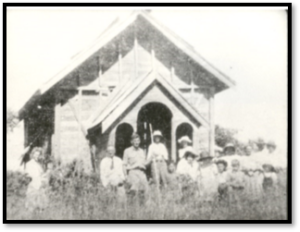
The roles of women: Birth and midwifery
Pregnancy and birth formed a large part of a woman’s life in the colonial era. During the era of the St Helena Penal Establishment (1867 – 1932), a total of 43 births occurred on St Helena Island. The first birth at St Helena Penal Establishment on 20 March 1873, was that of James Olson Hamilton, son of James and Ann Hamilton. [9]The last birth occurred on 19 March 1905, being Alice and Charles Davidson’s daughter Jessie.[10] Altogether, the 43 births were shared across 22 different families, with 17 girls and 26 boys born on St Helena Island during the prison era. ⁹
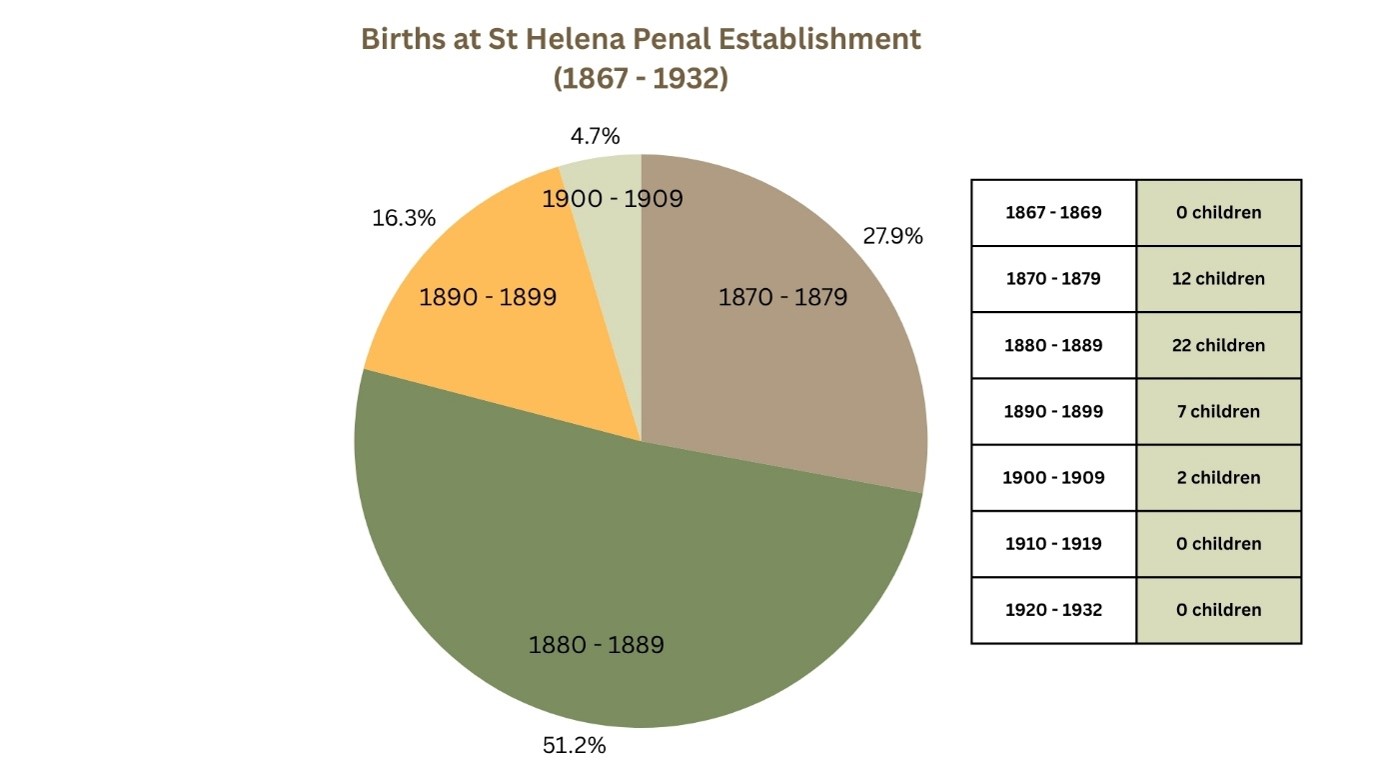
On an isolated island, an impending birth requires women to make deliberate choices about whether to give birth to a child on St Helena Island or on the mainland. Research from Dr Madonna Grehan into 19th Century midwifery [11] highlights three distinct periods for providing care for women giving birth – initially at homes with family and neighbours attendants, later at home or in a private facility with experienced ‘nurse’ or ‘midwife’ attendants and finally at dedicated lying in hospitals established for women. Dr Grehan’s research correlates well with patterns seen with the St Helena births over a 40-year period, particularly in relation to who is attending the birth and where that birth occurs.
St Helena home birth – with island women attending as midwives
The latter half of the nineteenth century saw women commonly give birth in their homes, attended to by family, friends or neighbours. On an isolated island with limited medical care, women of St Helena P.E. provided each other with the care and support necessary to deliver babies at their homes at St Helena Island. With a smaller number of families and women on the island in the 1870’s, Mrs Sarah Bowden stepped up to assist two of her neighbours to deliver baby Anne McKenzie in 1877 and baby David Smyth in 1879. Mrs Mary Cloherty, wife of Warder Edwin Cloherty, attended two births, both in December 1883 and Mrs Tatton, wife of Warder William Tatton, attended one birth in 1886. Mrs Frances Hore, the School teacher’s wife, was obviously well liked and trusted, having had many children of her own. Frances attended to 7 births on St Helena Island between 1885 and 1890, showing how important women were at supporting each other in these important times. Sarah Bowden, now the Chief Warder’s wife, attended to two more births, one being the birth of her own granddaughter on St Helena Island in 1905.
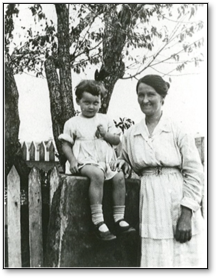
Pearce Collection, Qld Parks and Wildlife Service
St Helena home birth – with mainland attendants attending as midwives
However, of the 41 births on St Helena Island between 1873 and 1890, the greater majority of pregnant mothers on St Helena Island were attended to by private ‘Nurses’ or ‘midwives’ who travelled across from the mainland for the birth. These ‘nurses’ may have had recognised qualifications, but most relied on knowledge gained from practical experience to practice their trade and were also cheaper to engage. Two midwives in particular journey to St Helena Island many times between 1873 and 1890 – Mrs Birch (6 times) and ‘Nurse’ Sarah Nevison (3 times). Interestingly, in the same period, just as many St Helena mothers chose to travel to the mainland to give birth, again with midwives in attendance.

Birth in Brisbane Hospital – attended by nurses and doctors
Research indicates that despite the opening of the Lady Bowen hospital in 1864, dedicated to assisting women giving birth, by 1884 only 217 out of 10,679 registered Qld births were at the Lady Bowen hospital. ⁴⁵ Again, this pattern correlates well with the data research on St Helena Island, as only two women utilised the dedicated lying-in hospitals in Brisbane – Frances Hore at the Lady Bowen Hospital in 1885 and 1890 and Mrs Mary Agnes Hennessey attending the Alexandria Private Hospital in 1912. Some interesting patterns once again can be seen with the wives with higher status at St Helena Penal Establishment tending to give birth more on the mainland with doctors in attendance.
Case Study: The Fetherstonhaugh family
Florence Fetherstonhaugh – Matron and Midwife
Perhaps St Helena Island’s largest contribution to birth and midwifery in Queensland comes from another female living at St Helena P.E. Florence Julia Fetherstonhaugh, who arrived on St Helena Island with her family in 1885, aged 14 and remained until 1891. After leaving St Helena, Florence undertook extensive training as a nurse in Brisbane and later trained in Sydney in obstetrics. Florence became the Matron of Roma hospital, Matron of the old Lady Bowen Hospital for 25 years and was also the first matron of the New Brisbane Women’s Hospital. It was recognised that 23,230 babies had been delivered under Florence Fetherstonhaugh’s supervision, earning her the title of “The greatest mother in Queensland.”
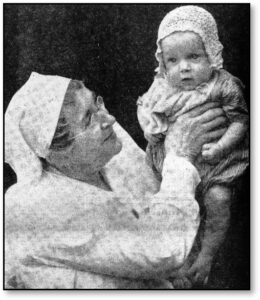
Eleanor Mary Fetherstonhaugh – St Helena Children’s cemetery
Eleanor Mary was born in 1869 at Auckland, New Zealand to Cuthbert John Fetherstonhaugh and Julia Louisa Waldie.
- The Fetherstonhaugh family emigrated to Brisbane around 1878 and came to live on St Helena Island in 1885. Eleanor was 16 years old on arrival.
- Eleanor died on the 29/5/1889, aged 19 years. The cause of death was Phthisis (Tuberculosis), which she was treated for for 7 months by Dr Wray. [24]
- She was buried in the Warders’ Children’s Cemetery on St Helena Island on 30 May 1889.
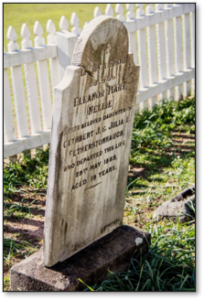
Image courtesy of Amanda Wright
The Warder Community supported the family at the graveside, with Warder Donald Smith acting as undertaker and Deputy Superintendent James Hamilton and Storekeeper and Clerk Charles Heslewood acting as witnesses.
[1] ST. HELENA. (1878, September 11). The Telegraph (Brisbane, Qld. : 1872 – 1947), p. 3. Retrieved May 11, 2026, from http://nla.gov.au/nla.news-article169692971
[2] Colonial Secretary’s Correspondence, Queensland State Archives, Item ID ITM847116.
[3] Murrie, B. (1985). Bob Murrie Oral history recording (E. Mitchell). Moreton Bay EEC.
[4] Ludlow, P. (1996). A century of Moreton Bay people Boolarong Press.
[5] Ba Pe, S., Ham C., & McDougall, P. (1975), St Helena Island thesis. Sourced from Qld Parks and Wildlife Service
[6] Colonial Secretary’s correspondence Queensland State Archives, Item ID ITM847045
[7] Colonial Secretary’s Correspondence, Queensland State Archives, Item ID ITM847170
[8] Queensland State Archives, Item ID. 16054, Administration file: St Helena State School No. 12. Dept. of Public Instruction, Letter No. 12118, “Report of Inquiry at St Helena: John Shirley”, 18 November 1890.
[9] Qld BDM Certificate, Birth Registration No. 1873/B/15565 James Olson Hamilton
[10] Qld BDM Certificate, Birth Registration No. Qld BDM 1905/C/7954 Jessie Davidson
[11] Email communication from Dr Madonna Grehan, Honorary Fellow, Dept. Nursing, School of Health Sciences, University of Melbourne, 8 February 2026
The role of women: Entertainment and recreation
The women of St Helena Penal Establishment (1867 – 1932), recognised the highly unique situation they lived in and addressed their isolation from friends, family and the wider society where they would normally have socialised and entertained. St Helena women joined together with the men of the St Helena Rifle Club to gain permission for and create annual celebrations and fun events on St Helena for the warder community. Permission from authorities was granted for friends from the mainland to attend, to stay overnight with families.
The 1887 Rifle Club Concert had “ten gallons of Beer, Ginger Beer and wine to be the only drinks allowed, the remainder to be spent on fruits and other such dainties.”[1] The 1888 Ball was enormous. Mrs Lucy Heslewood arranged the tables, and Mary Ann Graham decorated the warders’ barracks with flowers. Mildred and Florence Sanders and Miss Sarah Holloway sang, while Mrs Pennefather played the piano. All women and children were decked out in their finest clothes to create a special night. [2]
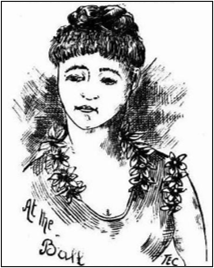
from http://nla.gov.au/nla.news-article84132201
St Helena PE families in the 1890’s to 1910’s, including the McLennan, Ryan, Bowden, Hennessey, Graham and Pennefather families were the only remaining families, yet they collaborated to improve their isolated existence. Many visitors were invited over to stay on the island for a number of nights, with this occurring on a weekly or fortnightly basis in 1899. Visitors and family members, both male and female adults and children, also attended fishing trips and explorations around surrounding islands in the St Helena PE whale boat. Added to that, excursions to the mainland occurred every few days with members from different families joining each other for a day in Brisbane for entertainment and shopping. [3]
Children’s recreation
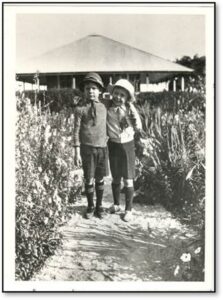
During leisure time, the children of St Helena families were allowed to go anywhere outside the prison stockade. Norman Townley recalls from the 1880’s “the happiest time of my life on this island, fishing, bathing, harpooning stingrays and sharks and shooting ducks after school.” [4]Bob and Fred Murrie fondly recalled that their escapades in the 1910’s, where “the steep grassy slope behind the cottages was great for sliding down on sheets of galvanised iron until they hit mud and water.” They also got “lots of cannon balls, which we dropped down the drains and down the slope.”[5] Girls often learnt to play a musical instrument or practise singing.
The role of women: Keeping the family healthy
Another issue for families of St Helena Penal Establishment was maintaining the family’s health and having access to timely and appropriate medical care on or off St Helena Island. Ongoing management of everyday coughs, fevers and injuries was the responsibility of the women in the home with their home remedies. Added to that, the Chief Warder’s role extended to him being ‘Medical Dispenser,’ an on-island person who could attend instantly to any sickness or injury. He would measure temperature, catalogue symptoms, notify the Visiting Surgeon and dispense the doctor’s approved diet for convalescents. Chief Warder James Hamilton reported that the role also ‘caused me many sleepless nights and anxious days, being called upon at all hours to attend warders, their wives and families and prisoners,’ [6] though he was never compensated monetarily for this.
A Visiting Surgeon attended St Helena Island weekly, and spontaneously for major injuries or illness. While the Visiting Surgeon treated prisoners and sometimes warders in the prison hospital, warders’ families received a visit at their home. Serious injuries, such as Charlotte Murrie having a sewing needle break off in her hand,[7] or 9-year-old John Cloherty falling out of a Mulberry tree and having splinters of wood enter his upper lip and teeth,[8] were immediately brought to a hospital in Brisbane. Disease outbreaks were always of concern on St Helena Island, with between 300 and 500 people lived in close quarters. Scarlet Fever reached St Helena twice, in 1875/76 and again in 1890/91, killing at least 2 children on St Helena.
However, the biggest threat of an epidemic was posed by the decision to empty Brisbane’s nightsoil on St Helena Island in 1887. Between 10-12 acres were set aside for the dumping of toilet waste brought across in cans aboard the boat ‘Mary’ daily. Comptroller General Pennefather, living on St Helena Island, reported grave fears for an epidemic of sickness, and his 1888 report detailed “a considerable amount of sickness amongst the warders, their families and also the confines, and a good deal of it is ascribed to the ‘sanitary’ operations carried out on the island by Brisbane municipal authorities.”[9] Warder Richard Gunning, his wife Margaret and children Herbert and Francis fared the worst, as their cottage was situated 80 yards from the nightsoil, where the stench was ‘unbelievable’ and it was ‘impossible to sleep.’[10] It was noted that when the nightsoil deposits stopped on the 1st January 1890, a marked decrease in sickness occurred.
The role of women: Keeping the family safe
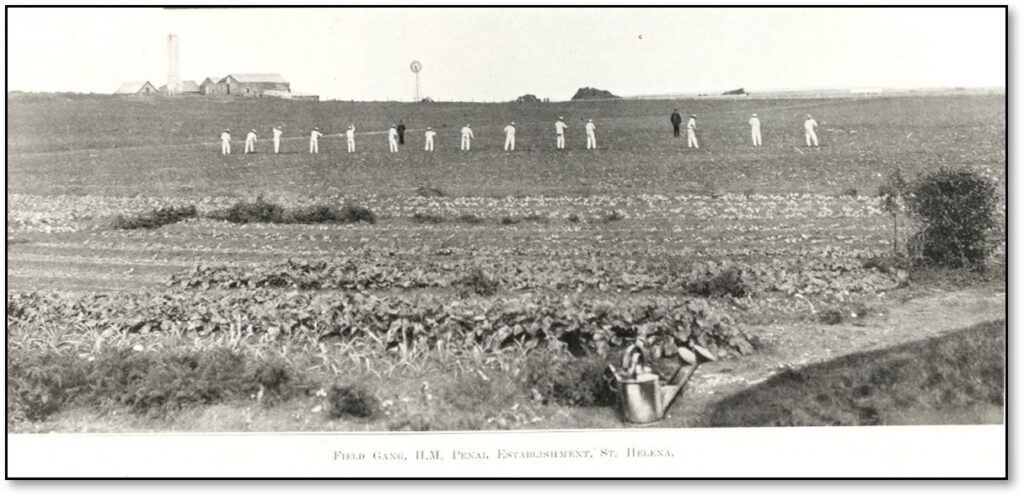
On a prison island where children can interact with men who have committed crimes amongst society, safety would always be a major consideration for every family on the island. The research conducted has uncovered no known attacks from prisoners against women or children. What is more obvious is the constant, heightened state of alert by warders to ward against any outbreak of prisoner riots or dangerous behaviour. The Gas explosion of 1888 is an example of the fear that Prison management, warders’ wives and prisoners all collectively felt when the island building that generated gas for lighting caught fire one night. Warder Donald Smith had the task of preparing the machine and lighting the match. Due to an unknown leak, he was blown out of the door with his bushy beard singed off, while 50 drums of oil started exploding. Norman Townley, son of the Superintendent William Townley, recalled the following:
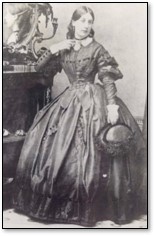
“Pandemonium broke out in the jail. As the prisoners, seeing the blaze, thought that the jail was on fire, they tore the hammock sticks out of their hammocks… and started trying to smash the doors of their cell, and the air was full of curses, shrieks and yells. My father had all the wives and children of the warders placed in the armoury with a guard over them, and posted the rest of the warders around the jail, and then had the prisoners released and herded into the yard… My mother (Gertrude Townley) was the pluckiest woman I ever knew. She scoffed at the idea of being locked up in the armoury, and she and my two sisters and myself stood at the front garden gate all the time.”[11]
Gertrude Anne Burton Townley (1834-1926) – Find a Grave Memorial
[1] Colonial Secretary’s Correspondence, Queensland State Archives, Item ID ITM847227
[2] Ball at St. Helena. (1888, October 6). Queensland Figaro and Punch (Brisbane, Qld. : 1885 – 1889), p. 23, from http://nla.gov.au/nla.news-article84132201
[3] St Helena diary 1899. (1991). Main Roads Dept, State Library of Qld.
[4] Norman Townley recollections (n.d.). Sourced from Piper McCall, stored at QPWS Heritage Parks
[5] Murrie, B. (1985). Bob Murrie Oral history recording (E. Mitchell). Moreton Bay EEC.
[6] Colonial Secretary’s Correspondence, Queensland State Archives, Item ID ITM847283
[7] Murrie, B. (1985). Bob Murrie Oral history recording (E. Mitchell). Moreton Bay EEC.
[8] Current News (1888, March 24). The Queenslander (Brisbane, Qld. : 1866 – 1939), p. 445, from http://nla.gov.au/nla.news-article19931277
[9] ST. HELENA REPORT. (1889, July 2). The Brisbane Courier (Qld. : 1864 – 1933), p. 4. Retrieved May 11, 2026, from http://nla.gov.au/nla.news-article3498145
[10] Colonial Secretary’s Correspondence, Queensland State Archives, Item ID ITM847273
[11] Norman Townley recollections (n.d.). Sourced from Piper McCall, stored at QPWS Heritage Parks
Women are the people who literally create a community. They create this in a physical sense, in terms of places to meet and socialise, but women also create community through care and support, creating networks, meeting needs and celebrating each other. While some individuals arrived having with connections already established, others met on St Helena Island and formed relationships that carried through their life for a considerable time.
Creating Community: Long term friendships formed
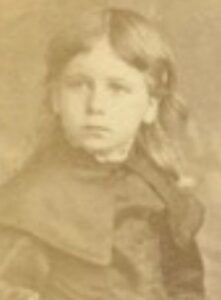
As this research has unfolded, it is clear that many families formed valuable friendship connections that were important on St Helena Island and also lasted beyond their time on St Helena Island. Superintendent William Townley’s family arrived in 1882 to great excitement. Son Norman recalls he was never lonely as he “there were plenty of the Chief Warder’s (Hamilton) sons to play with.”[1] The Bowden and Townley girls grew up together in the early 1880’s, with Alice and Agnes Bowden and Isabel and Constance Townley of a similar age. A decade later, entries in the 1899 Chief Warder’s diary reveal “Miss Bowden to stay on St Helena with Miss Townley and eight friends,” indicating that lifelong connections were made that existed a decade later. [2]
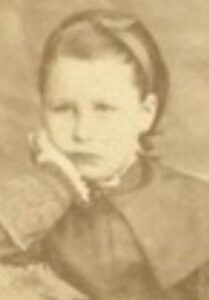
Creating Community: Prior connections and interconnectedness between warders
Across the Qld Prison service lies a network of connectivity between warders and families. This is not accidental, as often sons would follow their father’s footsteps into the prison service, or a warder would vouch for a trusted friend for employment into the prison service. Throughout this research, it became clear how very interconnected many warders and warders’ families were, suggesting that these prior relationships assisted in the gaining of employment on the island for family members or long-term friends. Having long term connections that extended to a time prior to being at the St Helena Penal Establishment would also create deeper bonds amongst the residents, with a greater need to ensure their welfare.
Case Studies – Interconnected warders’ families
Smyth/ Dodd families
William and Jane Smyth lived at St Helena Penal Establishment from 1874 to 1888, with William holding an important Trade Supervisor position. Despite this, 7 of their children were huddled together “in one room measuring 11ft by 10′.” [3]
The witness at William and Jane Smyth’s marriage was Janes’ cousin, Thomas Dodd. [4] Thomas was Warder/ Carpenter at St Helena P.E. in 1874 and lived on St Helena Island at the same time as the Smyth family. [5]
Thomas Dodd’s son Henry Harris Dodd also worked at St Helena P.E. as a Warder/ Tinsmith from 1893. [6] Henry Dodd is the only warder to die whilst on duty at St Helena P.E., stabbed by prisoner William Archer in the trade’s workshops in February 1898. [7]
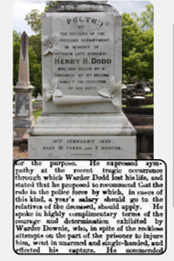
Henry Harris Dodd (1866-1898) – Find a Grave Memorial
An illustration of the connections and bonds formed on St Helena Island amongst the Warders’ community can be seen in the support given to William and Jane Smyth over a decade. When their son John Bamford Smyth was born in April 1878, island matriarch Sarah Bowden attended as midwife [8] and at John’s death in June 1878, Chief Warder James Hamilton acted as undertaker and Warders Richard Antisell and James Downie stood by the grave. [9] At the premature birth of their child Alice on 9 December 1883, the attending nurse was their island neighbour Mary Cloherty.[10] Alice’s death and burial on St Helena on 4 January 1884 saw 2 warders’ families by her graveside – that of Chief Warder Henry Gimson and Warder John Murphy. [11]
Hennessey/Downie/O’Sullivan families
Storekeeper Thomas Hennessey’s wife Mary Agnes Mogan, had her brother Warder Michael Hynes living at St Helena PE at the same time as herself. Mary’s sister also married another St Helena warder William Downie, whose Uncle Duncan and grandfather James Downie both worked as St Helena warders. James Downie’s daughter Margaret, also married a St Helena Warder, Patrick O’Sullivan.[12]
Friendship also blossomed on St Helena between the Hennessey and Ryan families. Mary and Thomas Hennessey paid tribute to Superintendent James Ryan in 1915 by taking the lead in his retirement celebrations, planning, hosting guests and playing music at the concert for many high-ranking officials. [13]
Creating Community: St Helena PE marriages
Perhaps the most lasting of bonds is that of marriage and at St Helena Penal Establishment the social life and community of St Helena allowed for connections to be made and relationships to blossom between St Helena Warders and the daughters within the community. On St Helena Island, 5 marriages took place between Warders’ daughters and St Helena PE Warders. These daughters had grown up on St Helena Island and this allowed for daily conversations and interactions with warders.
Mary Bowden, daughter of Chief Warder William Bowden, married Warder and Boatman David Suffern in January 1888. [14]
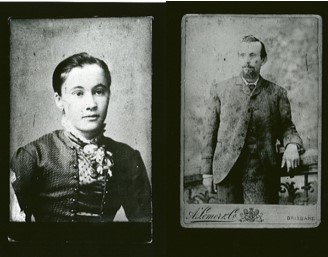
Elizabeth Smyth, another daughter of William Smyth, met and married Senior Warder Michael Dalton in January 1888. [15]
Lavinia Smyth, daughter of William Smyth, Trade Supervisor, married Warder Isaac Canning in April 1888. [16]
Alice Bowden, another daughter of CW William Bowden, married Senior Warder Charles Weston Davidson in 1899. [17]
Olga Aebli, daughter of Storekeeper John Aebli, married Warder Edmund Burr Knight in 1921. [18]
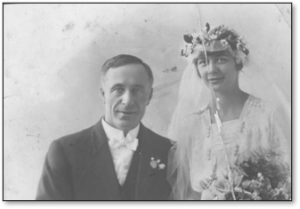
The support of the St Helena Community can also be seen at the wedding of Warder and Sugar boiler Richard Gunning to Margaret Kavanagh on 19 October 1884. Both Warder Henry Tatton and St Helena resident Margaret Lynch took the honour of being witnesses to their marriage.
Creating Community: Friendship and support at a time of loss
All communities face difficulties or unforeseen events and must rally together to address these and find a way of adapting and remaining resilient as a community. Perhaps the most important way a community can show friendship and support is upon the death of one of their own. It is noticeable on the various death certificates, how many St Helena families stood by the graveside of their neighbours’ children, when no other family members could be there in their time of need.
The Maitland family were lucky enough to have many generations living on St Helena Island at once. Charles and Elizabeth Maitland emigrated to Australia with Elizabeth’s parents Henry and Mary Sewell and their 3 children.[19] Arriving in Queensland in January 1874, Charles Maitland and Henry Sewell were both employed at St Helena Penal Establishment, evidenced by Henry becoming a signatory on the birth certificate of his grandson Charles Phillip, born on St Helena Island on 9 September 1875.[20]
However, by the time of the devastating death of Charles and Elizabeth’s daughter Mary Harriet on 3 January 1876, the Sewell family had been removed from St Helena. Instead, the Maitland family were supported by friendships within the St Helena Warder community, with James Hamilton, George Bellairs and Warder Samuel Olson attending to the burial. [21]
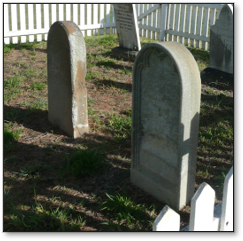
Image by Belinda Daly
For the women of the community, the deaths of two female members of their own small female community on St Helena Island would have shaken them considerably. Alice McDonald, the wife of the Superintendent and mother to son John Malcolm, died on St Helena Island on the 8th September 1881 after a long battle with Uterine disease. She was only 47 years old. [22] Initially buried at Toowong cemetery, her headstone was removed from Toowong and eventually returned to St Helena Island. The expression of her contribution to her family and to her community can be understood by the words carved into her headstone:
She was ever the keys to me strong
that bound the arch of social state,
Was her quiet couple that did create
that solid virtue and endurance long,
that gave the victory to those who wait.
Unto the husband and the son belong the
harvest of her works, she made straight
each crooked path, and armed us for the
strife, with the sickle of religion true
did cut down the tares that choked the
better life.
Elizabeth Ryan, Wife of Superintendent James Ryan, died on St Helena Island aged 62 years from Cancer of the uterus and was also buried at Toowong Cemetery. Expressions of her impact on St Helena and the wider community can be understood through her obituary: “Mrs Ryan spent a great many years in the somewhat secluded official quarter of the island prison, but enjoyed the friendship of a large number of person. She was a hospitable hostess, and her death will be keenly regretted.”[23]
Deaths of members of Warders’ families at St Helena Penal Establishment (1867 – 1932)
On St Helena Island, 20 men, women and children belonging to warders’ families died either on St Helena Island or while employed at the penal establishment.
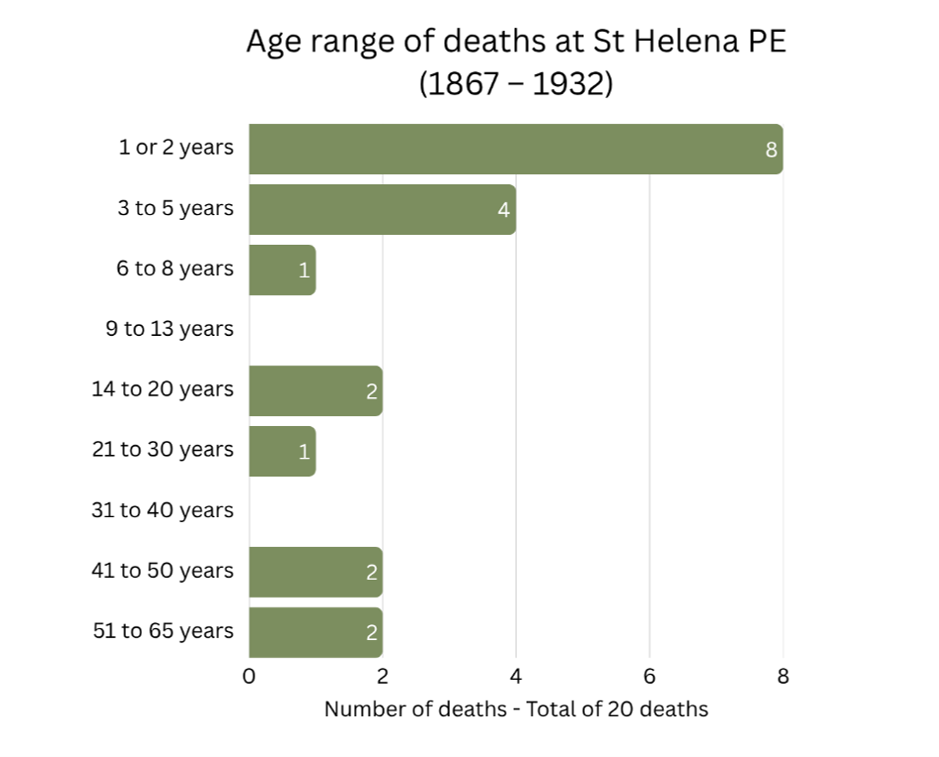
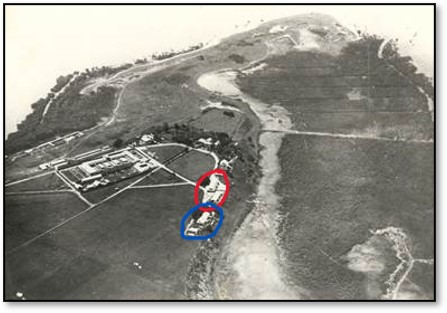
The first 2 children to die on St Helena Island – Sarah Bowden on the 14/02/1874 and Frances Hamilton on the 15/03/1875 as well as the last child’s death, 16-year-old Gregory McLennan on the 09/05/1898, were all buried in Brisbane. The remaining twelve children were buried in their own dedicated cemetery next to the prisoner cemetery at the southern end of St Helena Island. Two wives of the Superintendents, Alice McDonald and Elizabeth Ryan, Warder James Bell and Superintendent John A. MacDonald all died on St Helena Island, but were transported to Brisbane for burial. Warder Donald MacPherson was working at St Helena Penal Establishment, but upon falling ill was brought to Brisbane Hospital, where he died in 1891. ⁹
For the children, causes of death were as a result of diseases such a Tuberculosis, Scarlet Fever and Tetanus, however the vast majority of deaths were from young children not thriving after birth or having convulsions, diarrhoea and teething. The husbands and wives who died were as a result of long-term illnesses that affect adults, including issues with the spleen and heart problems, with both women dying of complications of the uterus, a difficult condition to treat on an isolated island without a specialised doctor.
Deaths and burials on St Helena Island [24]
| Name | Date of death | Place of death and burial | Cause of death | Age |
| Sarah Bowden
|
14/2/1874 | D. St Helena Island
B. Presbyterian Cemetery, Brisbane |
Teething accompanied by diarrhoea | 1 year 2 months
|
| Frances Hamilton | 15/3/1875 | D. St Helena Island
B. Presbyterian Cemetery, Brisbane |
Convulsions
|
17 days.
|
| Andrew Craigie | 29/12/1875 | Died and buried:
St Helena Island |
Scarlet fever and convulsions | 2 years
|
| Mary May Maitland | 03/01/1876 | Died and buried:
St Helena Island |
Scarlet fever
|
2 years
|
| John Henry Bamford Smyth | 6/6/1878 | Died and buried:
St Helena Island |
Ill nearly from birth | 41 days
|
| Anne McKenzie | 12/8/1878 | Died and buried:
St Helena Island |
Acute hydrocephalus | 1 year
|
| Frank Holloway
|
18/12/1881 | Died and buried:
St Helena Island |
Marasmus
|
2 months
|
| Alice Smyth
|
1/1/1884 | Died and buried:
St Helena Island |
Born prematurely, general debility | 17 days
|
| Christopher MacPherson | 2/1/1884 | Died and buried:
St Helena Island |
Convulsions | 8 days
|
| George Holloway | 31/10/1884 | Died and buried:
St Helena Island |
Traumatic tetanus | 8 years
|
| Charlotte Hore | 03/11/1887 | Died and buried:
St Helena Island |
Diarrhoea and convulsions | 5 months
|
| Eleanor Fetherstonhaugh | 29/05/1889 | Died and buried:
St Helena Island |
Tuberculosis.
|
19 years
|
| Augustus Herbert Sydney Hore | 4/8/1889 | Died and buried:
St Helena Island |
Convulsions and Diarrhoea
|
7 months
|
| Montague Ruthven Hore | 19/12/1890 | Died and buried:
St Helena Island |
Diarrhoea and exhaustion | 17 days
|
| Gregory McLennan
|
09/05/1898 | D. St Helena Island
B. Nundah Cemetery |
Weak intellect from birth, Diarrhoea, Exhaustion | 16 years
|
| Alice McDonald (Wife of Superintendent) | 8/09/1881 | D. St Helena Island
B. Toowong Cemetery, Brisbane |
Uterine disease
|
47 years old
|
| Elizabeth Ryan (Wife of Superintendent | 3/03/1915 | D. St Helena Island
B. Toowong Cemetery, Brisbane |
Cancer of the uterus
|
62 years
|
| John A MacDonald
|
12/06/1924 | D. St Helena Island
B. Toowong Cemetery, Brisbane |
Heart attack
|
Aged 64
|
| Donald McPherson
|
13/12/1891 | D. Brisbane Hospital
B. Nudgee cemetery |
Dysentery
|
44 years.
|
| Joseph Bell
|
27/9/1886 | D. St Helena Island
B. Toowong Cemetery, Brisbane |
Disease of the spleen
|
Aged 29 years.
|
Community resilience: managing conflict within the community
Many of the events created by the warder families were intended to create a close and interconnected community together in a relaxing and happy occasion, where women could safely sing, dance and enjoy each other’s company. However, the 1886 St Helena Concert was a sober reminder to remain alert and protective of their children at all times. As the concert ended at 9 pm, and as people stood talking and eating, a sexual assault incident occurred. At that time, Eliza Holloway asked her 12-year-old daughter Sarah Ann to check on baby Ethel back in their island home. As Sarah Ann returned to the concert, she saw Warder Isaac Canning nearby and claimed that he led her over to a fence 20 to 30 yards off by her arm. Here, Sarah Ann reported that Canning asked her to lift her dress and ‘tore her drawers.’ Eliza later accused Isaac Canning of inappropriate contact with her daughter, which he vehemently disagreed and said they only shared a cup of coffee and talked. An inquiry was held on St Helena, but Eliza eventually asked for the case to be dismissed, as she said ‘no harm was done to the girl.’ However, she made it clear that ‘Warder Canning need not come near me or my family again.’ [25]
Fiona Pearce Collection, Qld Parks and Wildlife Service
An interesting adjunct to the story is the fact that two years later, Warder Canning married another St Helena Island woman, Lavinia Smyth, in April 1888. Lavinia had lived on St Helena since around 1875 as her father was a Trade Supervisor. In a small community, reputation and memories often remain long after an incident has occurred, but it appears that Isaac Canning was given another opportunity by the St Helena Community. Unfortunately, his negative attitude towards women was evident again in 1904 when he was found guilty of assaulting his wife, Lavinia. [26]
Community disconnect: Reputations lost and a divided community
After many years of difficulty gaining and retaining a qualified Department of Education teacher for the St Helena Island School, the arrival of Walter Hore in 1884 with his large family did not solve St Helena’s education problems. Two incidents in 1887 served to illustrate the fracture that had grown between Schoolteacher Hore and a large portion of the warder community in just over two years. In 1886, the School Inspector John Shirley wrote, Hore “governs well” but “he fails as a teacher.” [27] In January 1887, the Hamilton, Cloherty, Munro, Fetherstonhaugh, McPherson, Howard, Harrison, Sanders and Graham families petitioned for an inquiry into the competency of their school teacher, threatening they would withdraw their children. [28] Chief Warder James Hamilton and wife Ann withdrew their many children from the school permanently.
Retrieved June 2, 2026, from http://nla.gov.au/nla.news-article218331336
The second incident on 19 April 1887 was a serious one. Warder Edwin Cloherty recorded a complaint against the Walter Hore for cruel treatment of his 8-year-old son John, who Edwin described as ‘a delicate child’. When John did not come home for ‘dinner’ at 1pm, Edwin found him at the school, having just been badly caned by Mr Hore. for ‘not doing his sums’ Edwin accused Hore of being in a ‘temper,’ evidenced by the marks all over John’s arms, legs and even his eye, which Mr Hore said was due to John wriggling. Schoolmaster Hore claimed John had kicked him on 2 previous occasions and that he was ‘refractory.’ Walter claimed to have given him six stripes, and if there were more marks it was because Edwin Cloherty himself had flogged the child, or the schoolboys had struck each other with a stick playing a game called ‘horses.’ Margaret Smyth, a 13-year-old pupil, summed it up neatly: ‘I never saw any other child get as severe a caning as Cloherty did.’ [29] The division within the Warder Community never improved. Inspector Shirley reported that Hore had written letters to the Department stating that under the management of Superintendent Pennefather, “opportunities [were] seized upon to annoy and wound him”, whilst Superintendent Pennefather’s replies showed he considered Hore “irritable under constraint, wanting in self-discipline and covertly insubordinate”. [30]
In a small community, the politics and reputational damage connected a woman’s husband would create an interesting dynamic as women attempted to balance their relationships with other wives while also being seen to support their husband. Frances Hore, the school teacher’s wife and her Pupil teacher daughter Edith would have experienced this. Frances was well-liked, participated in social events, supported education and her many children contributed greatly to the island community in education, music and companionship. She was a trusted midwife to 7 island births which all occurred during the conflict with her husband. The community rallied around Frances and Walter despite the difficulties, as 3 of their children died and were buried on St Helena Island. Standing beside the grave of daughter Charlotte in 1887 stood members of the Heslewood and Townley families,[31] by son Augustus’ graveside in 1889 stood members of the Fetherstonhaugh and McPherson families [32] and by son Montague’s graveside were members of the Dalton and Sanders families. [33]
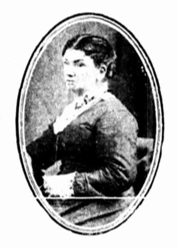
In one of the most devastating of ironies, it was Frances Hore, along with Kate McPherson and Mrs Howard, brought Scarlet Fever to St Helena in December 1890, forcing the removal of the warders’ families permanently. Families were banned from going to Brisbane due to a Scarlet Fever outbreak. Frances Hore was given special permission to attend the Lady Bowen Hospital to give birth to her son Montague on the 2 December 1890 and was accompanied by Mrs Howard. On her return, 5 members of the Hore family developed symptoms as well as a son in the Cloherty family. Kate McPherson also went to Brisbane and her family developed symptoms, passing it on to the Fetherstonhaugh and Sanders families. In a few short weeks, the majority of women and children that formed the St Helena PE warders’ community were gone forever. [34]
[1] Norman Townley recollections (n.d.). Sourced from Piper McCall, stored at QPWS Heritage Parks
[2] St Helena diary 1899. (1991). Main Roads Dept, State Library of Qld.
[3] Colonial Secretary’s Correspondence, Queensland State Archives, Item ID IITM847084
[4] Queensland BDM Index, Queensland Marriage Certificate, Smyth/Dodd 1868/C/590
[5] Source: Letterbook of the Sherriff and Under Sheriff containing letters to the Superintendent and Gaoler at St Helena 1875 – April 1877, Qld State Archives DR56996
[6] Register of warders and warders’ defaulters’ (charge) book – H M Penal Establishment, St Helena, 1882 – 1931. Queensland State Archives, ITM271614
[7] Register of Officials and Warders and Defaulters’ Book. Queensland State Archives, ITM271698
[8] Qld BDM Certificate, Birth Registration No. 1878/C/1882 John Bamford Smyth
[9] Qld BDM Certificate, Death Registration No. 1878/C/1018 John Bamford Smyth
[10] Qld BDM Certificate, Birth Registration No. 1884/C/5838 Alice Smyth
[11] Qld BDM Certificate, Death Registration No. 1884/C/4061 Alice Smyth
[12] Register of Officials and Warders and Defaulters’ Book. Queensland State Archives, ITM271698
[13] James Ryan’s 50 years commemorative booklet: 1915, sourced from Qld Parks and Wildlife Service
[14] Qld BDM Index, Marriage Registration No. 1888/C/516 D. Suffern and M. Bowden
[15] Qld BDM Index, Marriage Registration No. 1888/B/12050 M. Dalton and E. Smyth
[16] Qld BDM Index, Marriage Registration No. 1888/B/12278 I. Canning and L. Smyth
[17] Qld BDM Index, Marriage Registration No. 1899/B/19761 C Davidson and A. Bowden
[18] Qld BDM Index, Marriage Registration No. 1921/B/28671 E. Durland Knight and O. Aebli
[19] Immigrant card Index; Passenger List for the vessel Winefred, IMM/114 (Microfilm Z1958), p. 554, Qld State Archives.
[20] Qld BDM Certificate, Birth Registration No. 1875/B/19850 Charles Philip Maitland
[21] Qld BDM Certificate, Death Registration No. 1876/B/10317 Mary Harriet Maitland
[22] Qld BDM Index, Death Registration No. 1881/C/1925 Alice Malcolm McDonald
[23] Obituary (1915, March 13). The Age (Brisbane, Qld. : 1892 – 1929), p. 4. Retrieved from http://nla.gov.au/nla.news-article291931747
[24] Qld Births, Deaths and Marriages Index, Qld BDM Death Certificates acquired for all listed children.
[25] Colonial Secretary’s Correspondence, Queensland State Archives, Item ID ITM847215
[26] Trove, 1904 ‘South Brisbane Police Court.’, The Telegraph (Brisbane, Qld. : 1872 – 1947), 21 October, p. 2.
[27] Brady, T. (2016). “Raw, free”, and “almost rude”: educating warders’ children on St Helena Penal Establishment. History of Education Review, 45, 103-114. https://doi.org/10.1108/HER-03-2014-0021
[28] Queensland State Archives, Item ID 987858, Register of teachers – male includes appointments, etc. 1876 – 1903/1904. Vol. I. p. 129. Report: Inspector MacGroarty, 21 June 1888, 16 October 1889 and Inspector Shirley, 10 October 1890.
[29] Colonial Secretary’s Correspondence, Queensland State Archives, Item ID ITM847232
[30] Brady, T. (2016). “Raw, free”, and “almost rude”: educating warders’ children on St Helena Penal Establishment. History of Education Review, 45, 103-114. https://doi.org/10.1108/HER-03-2014-0021.
[31] Qld BDM Certificate, Death Registration No. 1887/C/2911 Charlotte Kathleen Hore
[32] Qld BDM Certificate, Death Registration No. 1889/C/3605 Augustus Sydney Hore
[33] Qld BDM Certificate, Death Registration No. 1891/C/3069 Montague Ruthven Hore
[34] SCARLET FEVER AT ST. HELENA. (1891, January 30). The Brisbane Courier (Qld. : 1864 – 1933), p. 5. Retrieved May 7, 2026, from http://nla.gov.au/nla.news-article3521792
This research pays tribute to the women who were instrumental in making a community of families thrive on an isolated penal settlement. The names of the 47 women who headed each household at St Helena Penal establishment have been forgotten to history, but are now remembered and recorded in perpetuity in recognition of their contribution to their island community and more widely to the St Helena Penal Settlement from 1867 to 1932.
| St Helena Penal Establishment women | ||
| Anna Petrea AEBLI
nee PETERSEN |
Margaret Josephine GUNNING
nee Kavanagh |
Mercy Baynton Dorcas
MC LENNAN nee Ford |
| Frances Jane BELL
nee Bevan |
Ann Jane HAMILTON
nee Gamble |
Kate MC /MAC PHERSON
nee White |
| Mary BELLAIRS
nee Black |
Ellen Sophia HARRISON
nee Harrison |
Mary MULLANEY
nee O’Sullivan |
| Sarah BOWDEN
nee Gawn |
Mary Agnes HENNESSEY
nee Mogan |
Mary MUNRO
nee McLeod |
| Margaret Grace BROWNE
nee O’Malley |
Mary HENREY
nee Merchant |
Margaret MURPHY
nee Lynch |
| Zana Belle CAMPBELL
nee Cloherty |
Lucy Agnes HESLEWOOD
nee Corbett |
Charlotte MURRIE
nee McMunn |
| Mary CLOHERTY
nee Hickey |
Eliza Jane HOLLOWAY
nee Amlin |
Margaret NORTH
nee Nixon |
| Elizabeth CORBETT
nee Clarke |
Frances Elizabeth HORE
nee Joseph |
Mary Rose PENNEFATHER
nee Seward |
| Margaret Maxwell CRAIGIE
nee Laidlaw |
(Unknown) HOWARD
|
Elizabeth Sarah RYAN
nee Evans |
| Rebecca CRANCH
nee Bird |
Emma Eliza KEATING
nee Thrower |
Elizabeth SANDERS
nee Puncher |
| Elizabeth DALTON
nee Smyth |
Helen LAPRAIK
nee Durward |
(Unknown) SEYMOUR
|
| Alice Sarah DAVIDSON
nee Bowden |
Rachel LYNCH
nee McWade |
Jane SMYTH
nee Dodd |
| Julia Louisa FETHERSTONHAUGH
nee Waldie |
Helen MAC DONALD
nee Bruce |
Mary McMeekin SUFFERN
nee Bowden |
| Annie Maud FITZGERALD
nee O’Malley |
Elizabeth MAITLAND
nee Sewell |
Annie TATTON
nee O’Kelly |
| Mary GIMSON
nee McHugh |
Alice MC DONALD
nee Malcolm |
Gertrude Ann TOWNLEY
nee Burton |
| Mary Ann GRAHAM
nee Gibson |
Ellen MC KENZIE
nee Brown |
|
Research by Belinda Daly 2026

